

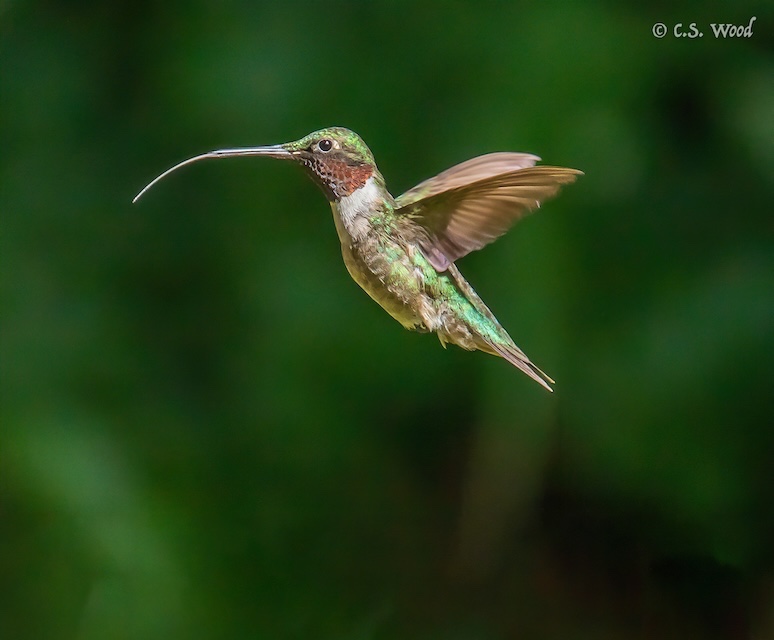
Annual Meeting: Chris Wood
Bird Migration and CT's Role in this Amazing Natural Phenomenon
North Madison Congregational Church
Friday, November 14
7:00 p.m.
Chris Wood has been a birder and photographer for over 50 years. He has a Master’s Degree in biology and studied under famed ornithologist Dr. Noble Proctor. Chris is retired after a career as a state government executive, a land conservation and management planner with The Nature Conservancy, a municipal planner, and a private land use consultant. He is a past president of the Connecticut Ornithological Association, a founding member of the Western Connecticut Bird Club, and he served as chair of the first Connecticut Breeding Bird Atlas steering committee.
Chris now spends much of his time photographing birds and nature, traveling to the neotropics and southwest US to see and photograph as many different hummingbirds as possible, and helping maintain their yard and gardens in Woodbury Connecticut.
Chris will present an overview of bird migration, with particular consideration of where Connecticut fits into the big picture of bird conservation and the enjoyment of the hobby of birding. With a state list of over 420 birds, many of which are migrants through the state, Connecticut birders have the opportunity to see well over one quarter of all the bird species found in the United States. Sustaining necessary habitats for breeding birds and migrants in our highly developed state is an important goal for land conservation efforts.
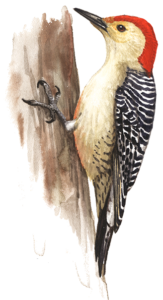
Red-bellied Woodpecker
The Red-bellied Woodpecker is a common bird in the Land Trust forests. Its name is somewhat odd since the pinkish color on the breast area is seldom visible, but the red cap is prominent. Look for zebra-stripes on the back and flashes of white on the wings when it’s in flight. The male has the red all the way to the bill, but females only have a red crown and brown before their beak. The call is a quick quirrrr, and a ch-ch-ch-chirrrrrrr! Thirty years ago the Red-bellied Woodpecker would have been a rarity in Connecticut, but today it’s one of our most common birds.
Painting © Michael DiGiorgio